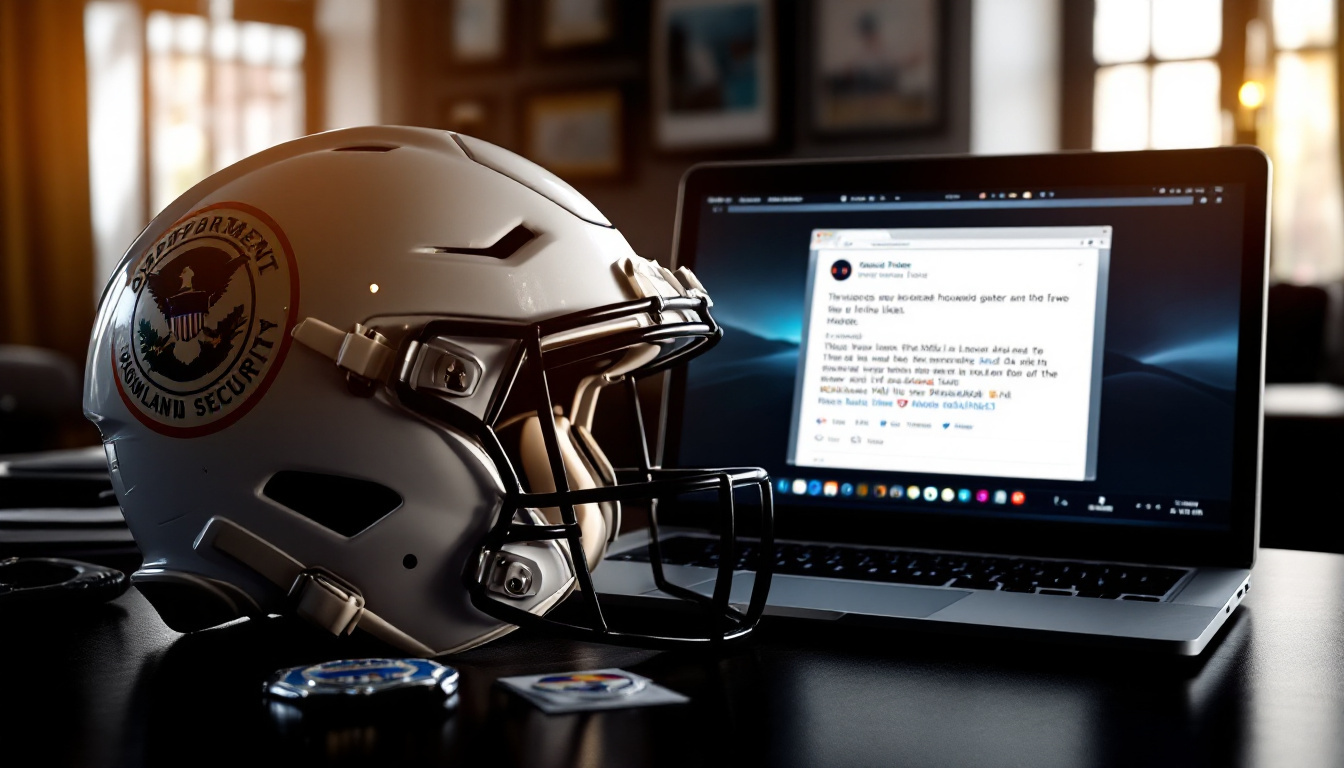
Over the weekend, the Department of Homeland Security posted a video on X featuring Hall of Fame safety Brian Dawkins — nicknamed "Weapon X" — in full pregame war-paint mode, stalking out of the tunnel and laying out receivers to the soundtrack of Korn's "Blind." The video racked up over 100,000 likes and 9 million views in two days. DHS wasn't promoting a throwback highlight reel. They were making a point about border enforcement.
The NFL demanded they take it down.
NFL spokesman Brian McCarthy contacted DHS and told them to delete the video, citing unauthorized use of league footage. The league that plasters its brand on everything from insurance ads to military flyovers suddenly discovered intellectual property concerns — right around the time its content showed up next to the words "border security."
DHS spokesperson Chandler Rebel responded with a statement that doubled as a punchline: "DHS is playing lockdown defense at the border. We will use every Weapon at our disposal, from A to X, to keep Americans safe." The "A to X" wasn't subtle. It wasn't supposed to be. The video stayed up.
Here's the video DHS put out in response to reports of a large migrant caravan headed to our southern border
Dawkins weighed in on September 28, posting his own statement. "Let's be clear. I didn't give permission for my name, image and likeness to be used by anybody — by anybody," he wrote. He followed up: "I have respectfully not given permission to anyone other than those I currently do business with to use my NIL." That's his right under NIL law, and nobody serious disputes it.
But the NFL's objection wasn't about protecting Brian Dawkins' licensing rights. If it were, they'd have contacted him first and let him handle it — the way NIL disputes normally work. Instead, the league itself jumped in and demanded deletion from a federal agency. The NFL wasn't acting as Dawkins' representative. They were acting as a gatekeeper deciding which messages get to borrow the emotional power of professional football.
The same league, remember, that fined a player $6,651 this season for writing "Glory Be to God" on his eye black. Unauthorized religious expression on the field — that's a penalty. But the real concern this week was a federal agency using game footage to talk about keeping Americans safe.
The NFL has licensing deals with the Department of Defense. Military jets fly over stadiums every Sunday. Troops get honored at halftime. None of that triggers a takedown demand, because the NFL controls the framing — patriotism as brand asset, carefully managed and commercially beneficial. The moment a government agency uses football imagery on its own terms, for a message the league didn't approve, the lawyers show up.
That's what this is actually about. Not copyright. Not Dawkins' NIL. The NFL didn't want its product associated with an administration that treats the southern border like something that should be defended. The league has spent years calibrating its political positioning — just enough flag-waving to keep the flyover-country audience, just enough progressive signaling to keep the corporate sponsors comfortable. A DHS highlight reel set to Korn doesn't fit the approved script.
DHS, to their credit, read the room better than the NFL's communications department. The "Weapon X" line landed because it said everything without saying it: we're not taking it down, we're not apologizing, and we're going to make a joke about it while we're at it.