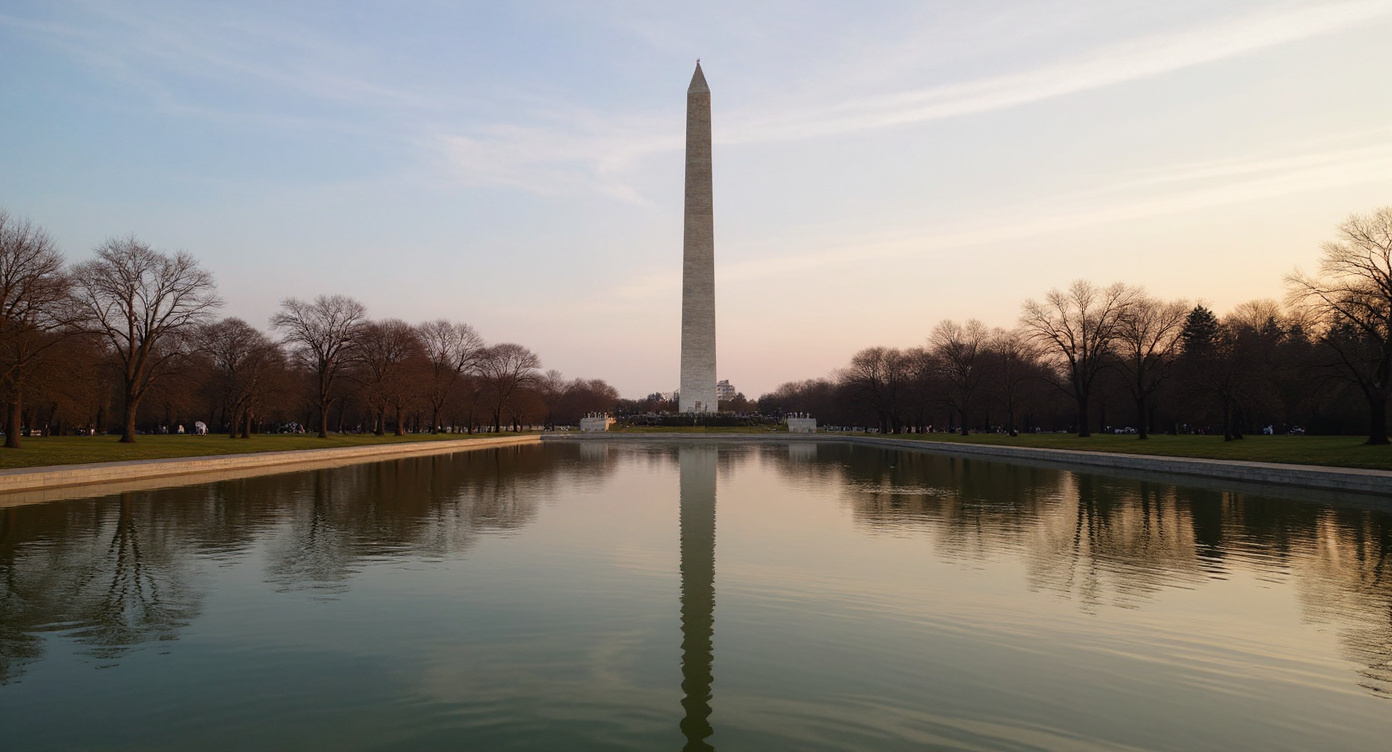
Before boarding Air Force One in Los Angeles, President Trump told reporters he still hasn't made up his mind about whether U.S. Attorney Jeanine Pirro keeps her job. The reason: Pirro's office moved to drop charges against a former Olympic athlete accused of vandalizing the Reflecting Pool at the Lincoln Memorial.
He said she "choked" because the judge was "vicious." When pressed on whether he'd fire Pirro, Trump said simply, "I haven't made a determination."
The case itself had already become a flashpoint. A former Olympic athlete was charged with vandalizing the Reflecting Pool, and Pirro's prosecutors moved to drop the charges after new evidence complicated the government's theory. Specifically, the pool's blue liner had begun floating in the water after the pool reopened, suggesting the damage may have stemmed from installation problems rather than deliberate destruction.
That's a legitimate prosecutorial judgment. Prosecutors are supposed to evaluate whether they can prove a case, and if evidence emerges that undercuts the core theory, dropping charges isn't weakness — it's how the system is supposed to work. Just The News reported that government prosecutors cited the difficulty of proving vandalism given the liner issues.
But here's the tension: Trump clearly wanted this case prosecuted. The Reflecting Pool vandalism hit a symbolic nerve — the Lincoln Memorial isn't just a monument, it's the kind of thing that makes Americans instinctively protective. When someone damages it, the public doesn't want to hear about liner installation timelines. They want accountability.
And Trump, whatever else you think of him, reads that instinct better than anyone in politics. So when his own appointee decides the evidence doesn't hold up and moves to drop charges, the collision is inevitable. He didn't fire her on the spot. He didn't defend her either. He left the question hanging in front of every camera on the tarmac.
The "vicious judge" comment adds another layer. Trump appears to believe Pirro didn't just misread the evidence — she buckled under judicial pressure. Whether that's accurate or not, it tells you how the President is framing this internally. Not as a reasonable prosecutorial call, but as a failure of nerve.
Pirro, for her part, has been a Trump loyalist for years. Her television career was built partly on defending his agenda. Her appointment as U.S. Attorney was itself a statement about the kind of prosecutors Trump wanted in place — fighters, not careerists. Which makes the "choked" line land even harder. It's not something you say about someone you're planning to keep around.
Then again, Trump has publicly dressed down appointees before and kept them on. The deliberation itself might be the point — a message to every U.S. Attorney in the country that dropping a politically significant case has consequences, even if the evidence gets complicated.