
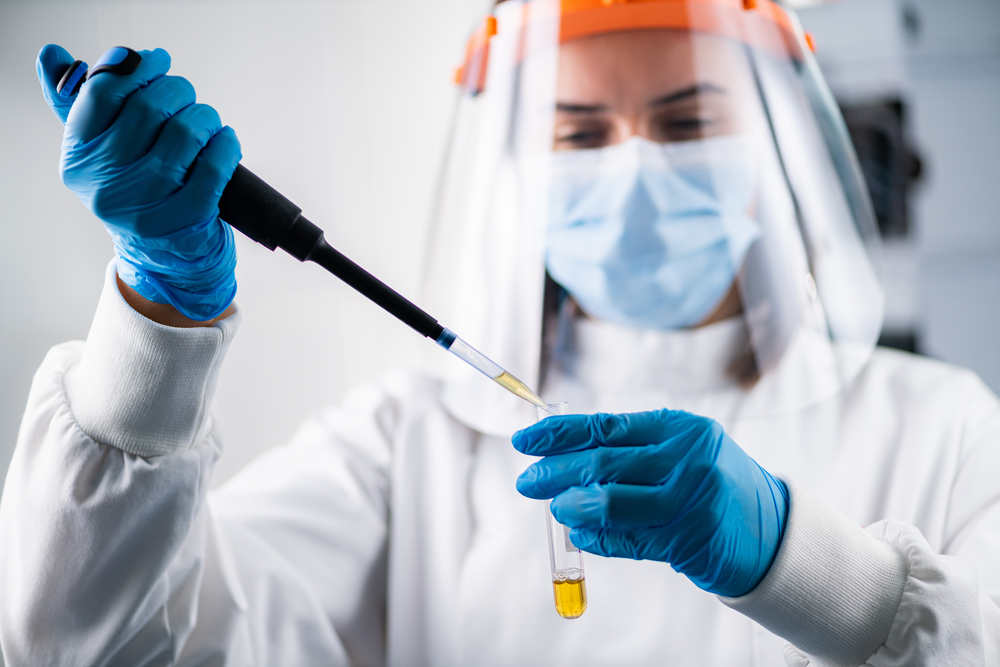
Sixteen viruses that have never existed in nature are now sitting in a Stanford University laboratory. They were designed from scratch by an artificial intelligence model, chemically synthesized, and brought to life in petri dishes — where they successfully killed bacteria, exactly as intended.
The screening system that's supposed to prevent someone from printing a dangerous genome at a DNA synthesis company? Voluntary. Not legally required. And it wasn't built to catch sequences no living organism has ever carried.
The study, published Thursday in the journal Science, comes from researchers at Stanford and the Arc Institute, a nonprofit AI and biology research organization in California. Assistant Professor Brian Hie and researcher Aditi Merchant led a team that trained two large language models on the genomes of over two million bacteriophages — viruses that infect bacteria, not humans. They used the ΦX174 bacteriophage genome as a template and asked the AI to generate entirely new viral genomes capable of infecting E. coli.
The model generated thousands of candidates. Nearly 300 were chemically synthesized and tested. Sixteen proved functional — viable, self-replicating viruses capable of killing E. coli strains, including antibiotic-resistant variants. As Just The News reported, these are viruses that don't exist anywhere in nature. The AI wrote them from whole cloth.
"We didn't add anything," Hie told Scientific American, describing how the model generated complete genomes end-to-end in a single left-to-right pass with no human editing.
That sentence should land harder than it does. An AI model, with no human intervention, composed a functional viral genome from nothing. The researchers deliberately did not train the model on human-pathogenic viruses — a safeguard that sounds reassuring until you read the companion editorial published alongside the study in Science.
Thomas Inglesby and Moritz Hanke of the Johns Hopkins Center for Health Security wrote that editorial. Their assessment is not subtle: "The ability to compose viral genomes using generative AI now exists; the governance to safely steer it does not."
They went further. The decision not to train on human pathogens is, in their words, "commendable but can be partly circumvented by fine-tuning." In plain English: the safety guardrail the researchers installed can be removed by anyone with enough computing power and the inclination to do so.
Hanke spelled out the worst-case scenario in an interview, "You could say, 'Hey, genomic language model, make me an influenza genome that is modified to be more transmissible or to be more lethal,'" he said. That's not a hypothetical from a science fiction novel. That's a Johns Hopkins biosecurity fellow describing what this technology makes possible right now.
The "gain-of-function" crowd will insist this is different. Bacteriophages kill bacteria, not people. The applications are medical — new antibiotics, new antivirals, treatments for the more than 2.8 million antimicrobial-resistant infections that hit Americans every year, killing over 35,000. All true. And all completely beside the point when you're talking about a technology that can be fine-tuned to target any organism.
We just spent three years watching the aftermath of a virus that may have leaked from a laboratory conducting gain-of-function research. Congress hauled witnesses in. Entire agencies were restructured. And the conclusion — from both parties, eventually — was that the oversight framework was dangerously inadequate for the research being conducted.
Now the research has jumped forward by a decade, and the oversight framework hasn't moved an inch. Inglesby and Hanke are calling for policies from the National Institutes of Health and the World Health Organization. Those are the same institutions that fumbled the last biosecurity crisis. The DNA synthesis screening that's supposed to catch dangerous sequences remains voluntary — a gentleman's agreement in an industry where the gentleman's agreement is the only thing standing between a laptop and a pandemic-capable pathogen.
The researchers did the right thing by publishing openly and flagging the risks themselves. That's not the issue. The issue is that the rules governing what happens next were written for a world where designing a virus required years of bench work, millions in funding, and institutional access. That world ended Thursday.
Now it requires a language model and a DNA printer. The first one is open-source. The second one takes purchase orders.