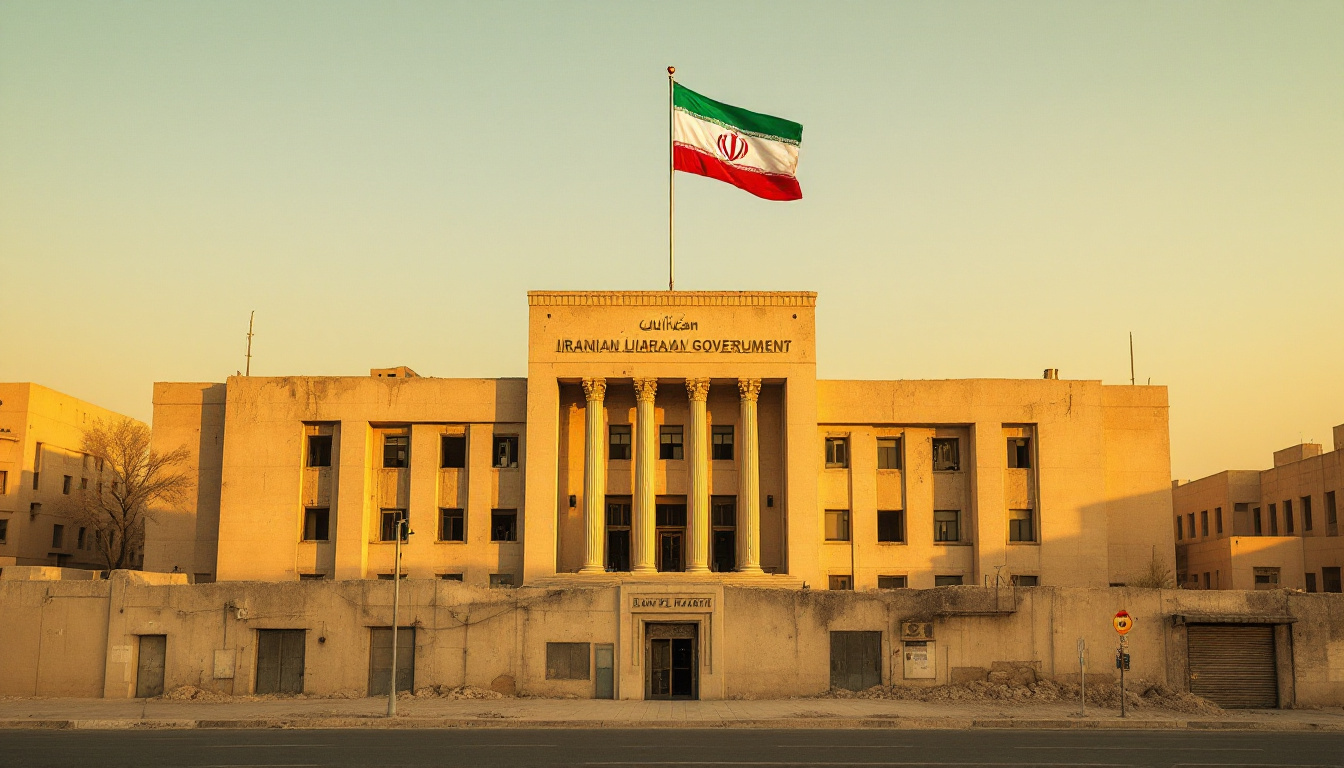
Iran's president went on the record this week asking the hardliners of his country to let him declare victory and end the war with the United States.
Iranian President Masoud Pezeshkian made the plea publicly, according to American Wire News: "The war must come to an end at some point. It is better that we demonstrate our strength and dignity today and tell the world that we have won and that we are ending the war."
Read that framing carefully. He's not proposing a ceasefire from a position of strength. He's proposing a face-saving exit so the regime doesn't collapse while pretending it chose to stop fighting.
Parliamentary Speaker Mohammad Bagher Ghalibaf went even further, delivering a line that would have been unthinkable from an Iranian official five years ago: "No matter how much military power we have, if our people are struggling and the country lacks financial circulation and economic growth, we will not achieve progress. As someone who has experienced war, we understand the true value of peace."
That's the speaker of Iran's parliament admitting that military force can't feed a starving economy. From a regime that has spent decades telling its people that revolutionary resistance was the only path.
Mark Dubowitz, CEO of the Foundation for Defense of Democracies, laid out what happened in strategic terms. "The U.S. military is winning the Battle of Hormuz," Dubowitz said. "As we've argued for months, the regime played its strongest card at its weakest moment — instead of waiting for Ali Khamenei's vision of a massive missile shield, nuclear weapons, a potent terror-proxy network, and permanent control over Hormuz."
Iran bet everything on the Strait of Hormuz — its one genuine piece of leverage over global energy markets — and played it while the regime's economy was already in what multiple analysts have called a "death spiral." The timing wasn't strategic. It was desperate. And the United States called the bluff.
The Wall Street Journal reported on the deteriorating conditions inside Iran, where the economic pressures have moved past the point where military posturing can compensate. Pezeshkian and Ghalibaf aren't freelancing with these public statements. They're testing whether the hardliners around Supreme Leader Ali Khamenei will let them negotiate a way out before the whole structure buckles.
The maximum pressure strategy — the one we were told was reckless, counterproductive, and guaranteed to push Iran toward nuclear weapons — produced an Iranian president publicly begging his own government to accept a face-saving surrender. Every foreign policy expert who argued that sanctions would only strengthen the regime's resolve is watching Iran's parliament speaker explain that military power is worthless without a functioning economy.
This is what winning looks like when the other side won't admit it lost. The regime can't feed its people, can't sustain its proxy networks, and played its last strategic card into a losing hand. Now the president and the speaker of parliament are doing the political equivalent of asking the Supreme Leader if they can please stop losing before there's nothing left.
The "declare victory" language is the tell. Countries that are actually winning don't need to ask permission to say so. Countries that need to manufacture a narrative of victory before suing for peace are countries that have run out of options and are hoping nobody notices.
Iran's leaders noticed. They're just hoping Khamenei lets them say it out loud.