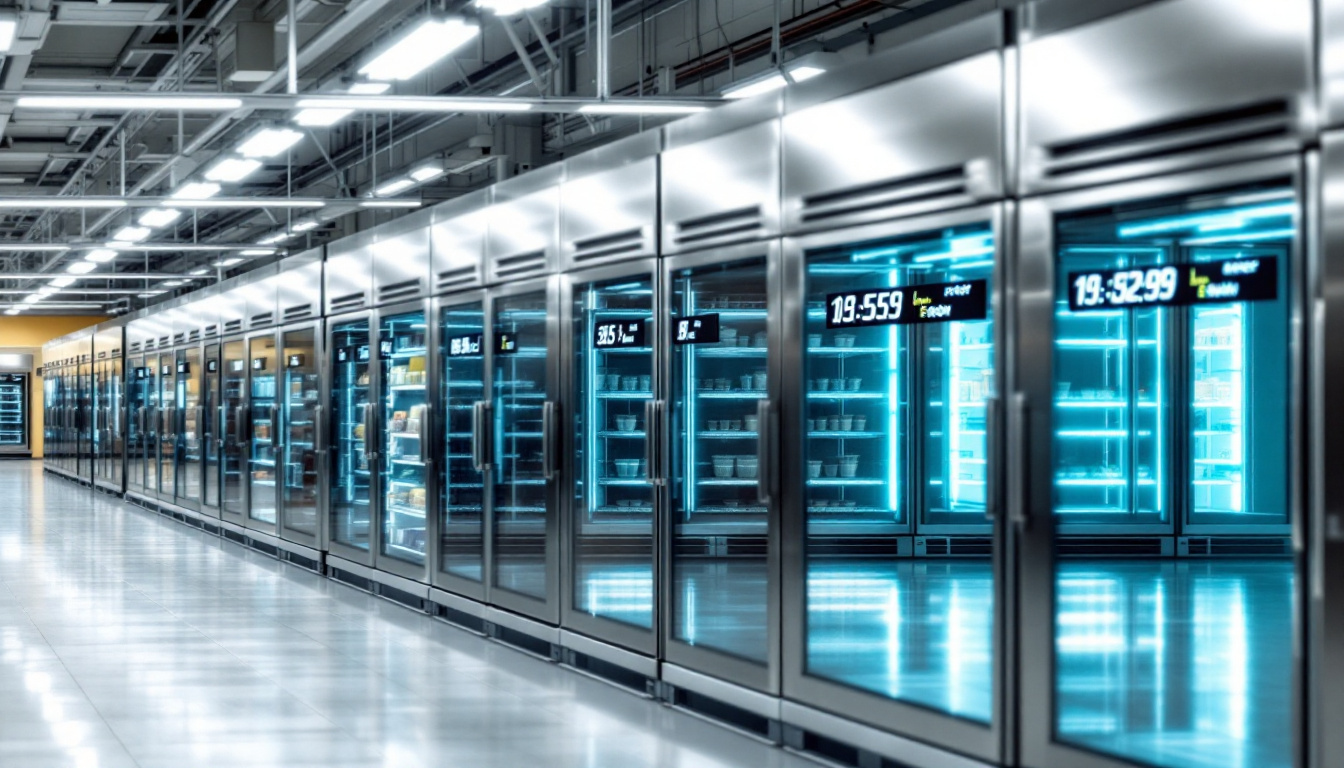
Smart refrigeration systems across 18 U.S. military bases simultaneously entered "extended defrost mode" over several consecutive nights — effectively shutting themselves off at the same time, across the entire continental United States. The Defense Commissary Agency scrambled to move perishable food to backup cold storage.
The Pentagon's explanation for how this happened? They don't have one. Or they won't share it.
A defense official confirmed the incident to Military Times on August 28, choosing every word like a lawyer at a deposition. "The Department is aware of a possible refrigeration disruption at some Defense Commissary Agency commissaries," the official said. A "possible" disruption. At "some" commissaries. Eighteen bases' worth of smart fridges going dark simultaneously is apparently still in the "possible" category.
The statement continued: the Defense Commissary Agency "has taken appropriate precautions to transfer products to alternate temperature-controlled locations to mitigate any product loss." Translation: they moved the food before it spoiled. Which is good operational response. But it's not an explanation.
As reported by Not the Bee, the Facebook page U.S. Army W.T.F! Moments — which has become an unofficial clearinghouse for the kind of military news that doesn't make press briefings — posted that "it seems CONUS commissaries that have fridges linked to an online system have been getting shut off over the past few nights." Fridges linked to an online system. Getting shut off. Over multiple nights.
That's the detail that matters. These weren't mechanical failures. These weren't power outages. These were internet-connected refrigeration units that stopped working in a coordinated pattern across a geographic footprint spanning the entire continental United States. The failure mode — extended defrost — is consistent with a remote command, not a hardware malfunction.
The Pentagon was asked directly about the cause. They declined to speculate. "Commissaries remain open, and all possible measures are being taken to ensure food safety," the defense official added. Which answers a question nobody was asking.
Here's what the Department of Defense conspicuously did not say: they did not say it wasn't a cyberattack. They did not attribute it to a software glitch, a firmware update gone wrong, or a vendor error. They did not name a cause of any kind. In Washington, what an agency refuses to rule out tells you more than what it confirms.
The broader pattern is hard to ignore. The U.S. military has spent the last decade connecting everything to networked systems — logistics, maintenance scheduling, inventory tracking, climate control. The efficiency gains are real. So is the attack surface. Every smart device on a military network is a door. Eighteen bases' worth of refrigerators entering defrost mode at the same time suggests someone found a door — or the system is so poorly architected that it can cascade-fail on its own. Neither option is reassuring.
The Defense Commissary Agency operates commissaries — essentially grocery stores — on military installations. They serve active-duty personnel and their families. The food supply chain on a military base isn't a convenience. It's infrastructure. When 18 nodes in that infrastructure go down simultaneously and the Pentagon's response is "we're aware of a possible disruption," the gap between what happened and what's being acknowledged is wide enough to drive a supply truck through.
Somebody connected the military's refrigerators to the internet. Across 18 bases, those refrigerators stopped working at the same time. The Pentagon won't say why.
That's three sentences. The first one is the decision. The second one is the consequence. The third one is the problem.