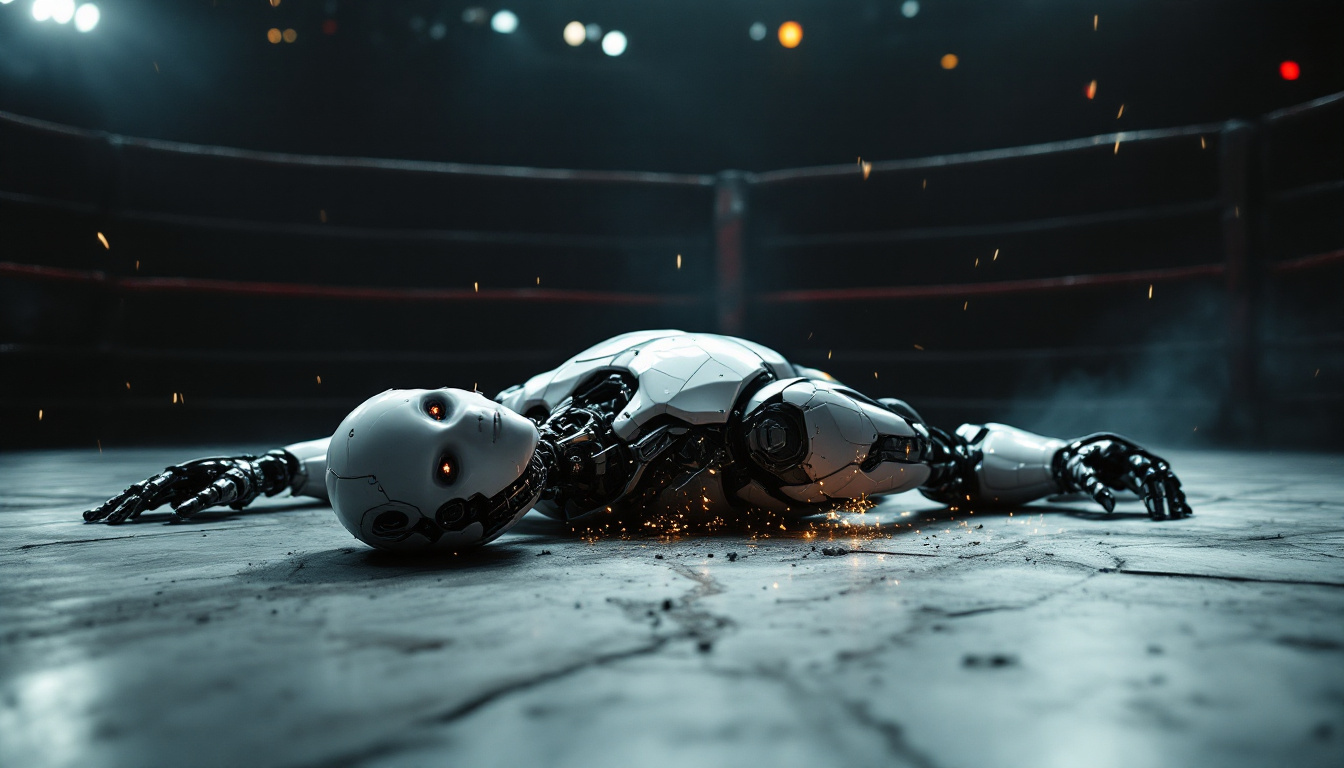
A man named Frankie LaPenna walked into a cage in San Francisco with two humanoid robots programmed to kick with 850 pounds of force. He walked out with a busted hand and the severed head of an EngineAI T800.
We've officially entered the timeline nobody predicted and everybody needed.
The event, organized by a robotics entertainment company called REK, billed itself as the first-ever human versus humanoid robot cage fight. The machines were modified EngineAI T800 models — six feet tall, built off a platform originally designed in China, and paired with technology from a company called Reflex Arc. LaPenna, a content creator who apparently woke up one morning and chose violence against the machines, also squared off against a smaller Unitree G1 model.
REK CEO Cix Liv described the ending in terms that belong in a sci-fi film and a bar story simultaneously. LaPenna "knocked the robot off balance, and ultimately finished the fight with the machine's head coming off." The standard T800 stands 5 feet 8 inches and weighs between 165 and 187 pounds. REK's modified versions were stretched to six feet and programmed to deliver strikes that would send most people to the hospital.
LaPenna took a knockdown during the fight. He injured his hand. And then he decapitated the thing.
The spectacle follows a 2025 boxing tournament in China that pitted robots against each other — 3,670 matches in the first simulator championship alone. But nobody over there put a human in the ring with one. It took an American to look at a machine designed for combat simulation and say, "Yeah, I'll fight it."
REK has already run its first simulator championship and clearly has plans to scale this into a regular event. Fox News picked up the footage. The internet did what the internet does. And somewhere in a robotics lab, an engineer is staring at a headless T800 wondering where the project went wrong.
The whole thing is absurd. A man fighting robots in a cage while the rest of the country argues about whether AI is going to write our novels and drive our trucks. The technology crowd keeps telling us resistance is futile. Frankie LaPenna's counterargument was his fists.
850 pounds of kicking force, six feet of engineered steel and servos, and the machine still lost its head. The robots will get better. They always do. But for now, the scoreboard reads: Humans 1, Machines 0 — and the winning move was blunt-force American stubbornness.